---
title: Fanging
slug: troubleshooting/fanging
description: Discover effective solutions for addressing the "Fanging" part defect from Carbon DLS printing. This comprehensive document explains how to identify, troubleshoot, and understand the root causes.
docTags:
createdAt: 2024-06-14T01:03:20.254Z
---
::::VerticalSplit{layout="left"}
:::VerticalSplitItem
**Fanging**
Portion of a lattice node is stretched out of position during printing.
:::
:::VerticalSplitItem
::Image[]{src="https://api.archbee.com/api/optimize/3CesIL2dYMCHPZvRjp8S0/TxqCcul6ZihXfu2em85dC_image.png" size="70" width="1680" height="1680" position="center" alt="Fanging" showCaption="false"}
:::
::::
# How to Identify
Fanging can be diagnosed as follows:
- Fanging occurs at lattice nodes, where struts intersect.
- The defect appears on the struts just before they connect together.
- Fanging appears like vampire fangs pointing towards the platform.
:::hint{type="info"}
[Looping](docId\:VUKY2xMsmEx2mqzTp2e2Y) and [Pillowing](docId\:SoJJs8eTsSqI8gguqItLZ) are defects that arise from the same issue but appear at different locations or features: at horizontal struts or surfaces, respectively.
:::
::::LinkArray
:::LinkArrayItem{headerType="IMAGE" headerImage="https://api.archbee.com/api/optimize/Nvx7WdIjE2XFpMaBlbCES-N-Kip5TCq_2QVsu9VCfrV-20240729-201730.jpg"}
**Cause** - Inconclusive
:::
:::LinkArrayItem{headerType="IMAGE" headerImage="https://api.archbee.com/api/optimize/Nvx7WdIjE2XFpMaBlbCES-hev1plXqls6cuGo7KvAwv-20240729-201742.jpg"}
**Cause** - Inconclusive
:::
::::
# Troubleshooting
:::hint{type="info"}
It is recommended that you review all the possible solutions before taking action to ensure you are pursuing the best course of action.
:::
If the best course of action is not apparent, try the troubleshooting options in the order listed. Refer [here](docId\:pPm8gmeGCY_0fkFwgTCyj) for more tips.
## Print Preparation or Part Design Adjustments
The following solutions will address print or part-related causes of the defects. Choose among the suggested actions below and select the best approach for your application. Usually only one type of adjustment is needed.
::::::ExpandableHeading
### Design
:::::VerticalSplit{layout="middle"}
::::VerticalSplitItem
Add struts to provide more structure at the problematic struts before they reach their connecting node.
:::hint{type="info"}
The performance of the lattice will change.
:::
::::
:::VerticalSplitItem

:::
:::::
::::::
:::ExpandableHeading
### Print Plan Adjustments
Reference [Print Plan Adjustments](docId\:NxUK0dltz_vemEAU0DIpN) for guidance on the following parameters:
[1 Pump Up Parameters](docId\:XP2lRJPJ4njFl_Z8N58rL)
- Pump Height Parameters
- Minimum Pump Height
- Minimum Distance from Peak
- Distance from Peak Multiplier
- Platform Speed Parameters
- Motor Up Speed
[3 Pump Down Parameters](docId\:y816PQpbuQT5CpIYeoliO)
- Platform Speed Parameters
- Motor Down Speed
:::
:::hint{type="info"}
If problems persist, please reach out to [Carbon Support](mailto\:support@carbon3d.com).
:::
# Explanation & Causes
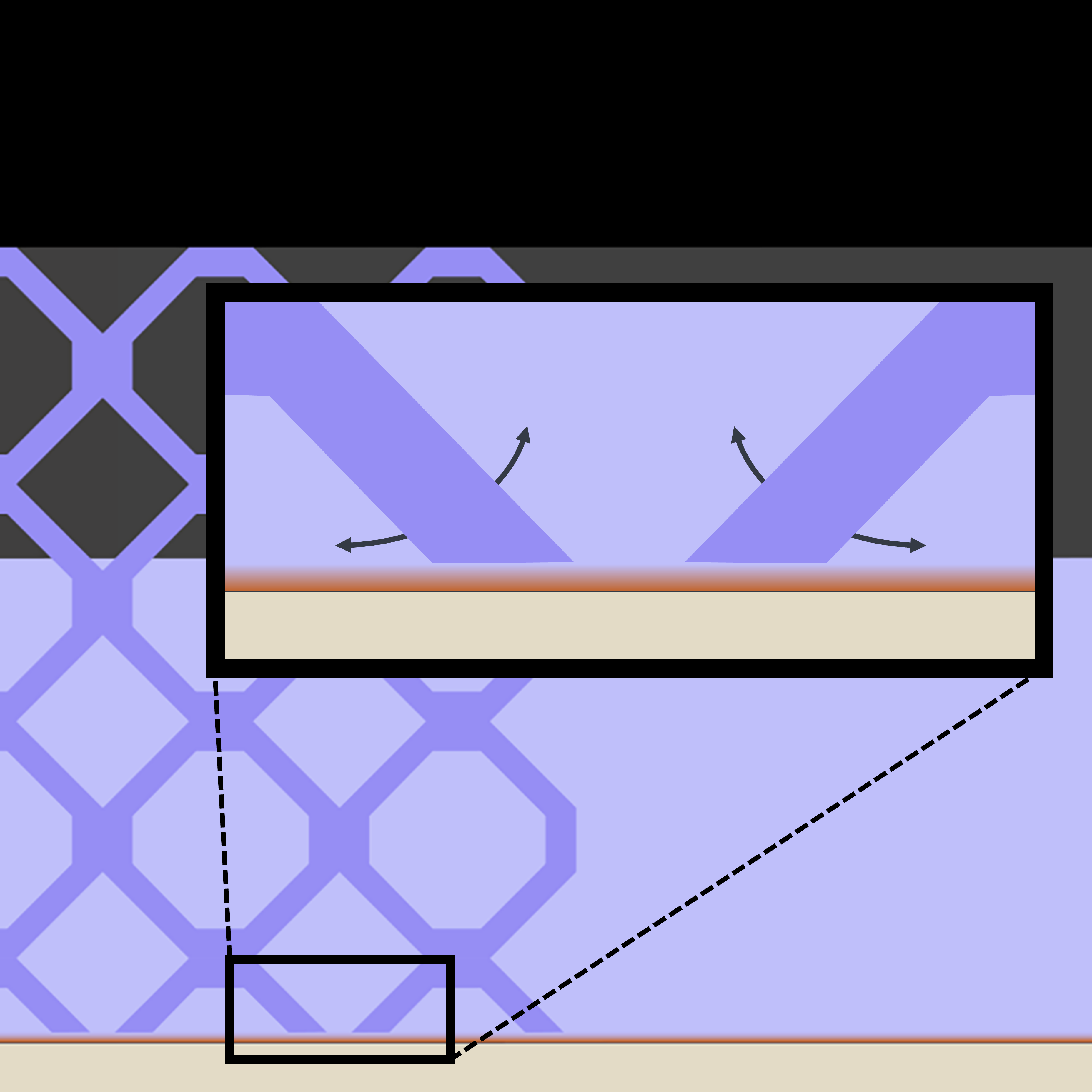
Fanging occurs in a lattice when struts are stretched out of position during printing. Struts that are building towards a connection node are structurally at their weakest just before connecting together.
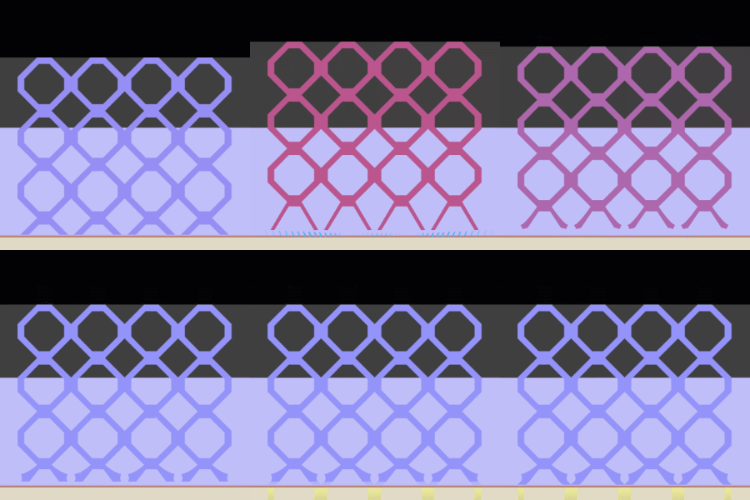
This makes the affected struts dangling and weak during the pump up stage. While the platform moves up, the weak struts are temporarily held in place by the surface tension of the dead zone, pulling it out of shape before the tension is broken. When the platform moves back down, the strut is even weaker in its stretched out shape, leaving it susceptible to be pushed in the other direction under the pump down forces. This is the position the malformed struts stay in when the next slice cures, leaving it to appear misshapen as "fangs" just before the struts connect together.
This defect usually occurs with elastomeric resins that are soft and pliable during printing.
Reference [DLS Printer Dynamics](docId\:U7XYytjyDp3BvsYy2qKcU) for more information on the stages of printing a slice.
*Z dimensions for pump height and slice thickness are exaggerated in the diagrams below for visibility.*
::::VerticalSplit{layout="middle"}
:::VerticalSplitItem
:::
:::VerticalSplitItem
:::
::::
## Causes
### Print Preparation or Part Design
::::VerticalSplit{layout="middle"}
:::VerticalSplitItem
How the part is **oriented**, **supported**, or **designed **is causing the defect.
:::
:::VerticalSplitItem

:::
::::
| Root Issue | Problem | Why Defect Presents |
| ---------- | ------------------------------------------------------------------------------ | ------------------------------------------------------------------------- |
| Designed | Lattice contains struts that are longer and weaker before connecting at nodes. | Short struts are less likely to be weak before connecting at their nodes. |
### Print Plan Adjustments
::::VerticalSplit{layout="middle"}
:::VerticalSplitItem

:::
:::VerticalSplitItem
[Print Plan Adjustments](docId\:NxUK0dltz_vemEAU0DIpN) adjust the print plan to optimize mid to high volume production and/or address part defects.
In doing so, adjustment may both **prevent or cause defects**. Below are adjustments that can cause this defect.
:::
::::
| Printing Stage | Parameter Type | Type of Adjustment | Why Defect Presents |
| -------------- | -------------- | ----------------------------------------- | ------------------------------------------------------------------------------------------------------------------------------------------------- |
| 1 Pump Up | Pump Height | **Increase** | Increased pump height provides more space for the weak struts to be stretched out of shape. |
| 1 Pump Up | Platform Speed | **Increase** | Increased Motor Up Speed provides less time for the weak struts to break from the dead zone surface tension while also increasing suction forces. |
| 3 Pump Down | Platform Speed | **Increase** | Increased Motor Down Speed increases the pump down forces that push the weak, stretched struts out of position. |